American Geriatrics Society Newsletter (2026: Volume 57, Number 3)
Debra Saliba, MD, MPH, AGSF and Alex Smith, MD, MS, MPH succeeded Joseph G. Ouslander, MD, AGSF as editors-in-chief of the Journal of the American Geriatrics Society (JAGS) in July 2026. As a team, Drs. Saliba and Smith bring an extraordinary depth of expertise and deep knowledge of the research landscape. Through their prior service on the Editorial Board, and more recently, as Executive Editors of JAGS, they have already made significant contributions to the journal. We cannot think of a better team to lead JAGS as the journal evolves to meet changes in the publishing environment and continues to publish impactful articles that are changing the landscape of how we age.
The AGS News team sat down for a far-ranging interview with Deb and Alex that covered a myriad of topics. Before diving into that interview, we want to share a little bit about them.
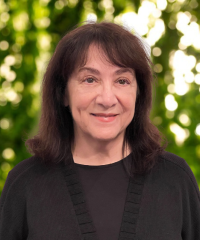
Deb Saliba is a past President of the Society and has served on the JAGS editorial board since 2016 and as Executive Editor since 2022. Dr. Saliba is a professor of medicine at the David Geffen School of Medicine at the University of California, Los Angeles (UCLA) where she holds the Anna and Harry Borun Endowed Chair in Geriatrics and Gerontology and directs the UCLA Borun Center for Gerontological Research. Dr. Saliba is also a physician scientist in the Greater Los Angeles VA GRECC. She has been actively involved with the AGS since she was a fellow in the mid-90’s.
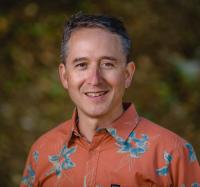
Alex Smith joined as Deputy Editor in 2017 and has served as Executive Editor since 2021. He is a professor of medicine at the University of California, San Francisco (UCSF) and a prolific geriatric-palliative care focused researcher who balances priorities as a clinician, educator, and mentor. Dr. Smith established the JAGS junior reviewer program in 2017 alongside Deputy Editor Ellen Binder, MD. He is also a co-host of the widely popular GeriPal podcast.
On to the interview…
1. What excites you most about stepping into this new leadership role at JAGS?
Alex: I am excited about collaborating with Deb on leading JAGS during unprecedented times in the world of scientific publishing. During our tenure on the Editorial Board, our focus has shifted from a monthly print journal to a journal that is focused on delivering digital content as soon as it is ready for publication so that investigators, clinicians, members of the public, and educators have access to the latest knowledge. Emerging technologies such as artificial intelligence and the varied ways people are accessing information are reshaping how information is seen and shared.
These changes bring both challenges and opportunities. I am excited to find innovative ways for JAGS to present and disseminate research while maintaining the rigorous scientific standards that define the journal.
Deb: JAGS is a vehicle for everything from updates on well-established, evidence-based approaches to cutting edge research, new methodologies, and emerging ideas that advance the field of geriatrics. I'm excited about the opportunity to help JAGS continue to lead these conversations and make a difference in the health of older adults.
Like Alex, I see the potential that digital transformation has for ensuring that our readers stay abreast of scientific advances that are improving our health and well-being as we age. At the same time, with the volume and pace of research continuing to grow, we have a growing responsibility to ensure that high-quality, rigorous science is identified, evaluated, and communicated clearly. I’m really excited about working with Alex and our editorial board to ensure that JAGS continues to support and elevate emerging researchers, educators, and clinicians who are shaping the future of geriatrics.
2. What topics or emerging areas of research do you hope to spotlight in the journal over the coming years?
Deb and Alex: One of JAGS’ greatest strengths is the breadth and depth of its content, and we will continue to build on that. Geriatrics has always taken a broader view of health. We focus not only on diseases, but on how older adults function in their homes and communities. That's why research on social factors, historical issues, disparities in care, and policies that affect access and outcomes will con tinue to be important areas for JAGS. At the same time, the science of aging continues as a core focus. JAGS serves as a platform for research across the full spectrum of the science of aging and across a broad array of disciplines and research areas. We plan to continue highlighting work across a broad array of disciplines and research areas. Three areas of research that we will intentionally focus on in the next several years are:
- Research that helps us better understand and address the structural factors that contribute to poor outcomes for older adults. JAGS has always been committed to improving care for those who are most vulnerable, and emerging research is providing important insights into how structural factors such as neighborhood, wealth, advanced age, and legacy of discrimination affect health outcomes.
- Geroscience where we expect to see major break throughs in the science of longevity and increased health span. JAGS should be a home for that science, particularly when it has clear relevance for clinical care. In this arena, our primary interest is in translational work that has an impact on the clinical care of older adults.
- Interventions that leverage our understanding of risks, protective factors, and geroscience to improve out comes for older adults. This area builds on descriptive and observational research to include implementation science, testing of care models, and educational innovation.
3. How do you envision the journal continuing to meet the needs of its audience?
Deb and Alex: Science is evolving rapidly and one challenge our field faces is moving beyond simply describing problems to identifying and testing solutions. While we need to conduct and disseminate research that helps us understand what is not working and why, we also want to know what interventions are effective and how they can improve care for older adults. Through what we publish in JAGS, we want to help people understand and engage with new ideas as they emerge and equip our readers with the knowledge they need to contribute, so that aging has a place at the table as science evolves and solutions are developed.
JAGS has always been dedicated to the practicing clinician who is caring for older adults, so keeping our articles clinically relevant is important to both of us. We also are interested in publishing research on things like policy and structural issues, as well as theories and concepts that will eventually lead to improved care of older adults.
We have learned so much from the editors who have come before us—Joe Ouslander, MD, AGSF; Bill Applegate MD, MPH, MACP, AGSF; Tom Yoshikawa, MD, AGSF; and David Solomon, MD, AGSF—and as a result, we understand the dedication it takes to provide the high-quality, impactful science that our readers seek. These editors also taught us that no single person can be an expert in every area, so we rely on our wonderfully talented editorial board and editorial leadership to improve the way we evaluate and communicate the science. We couldn’t maintain JAGS’ quality without this team’s positive energy to keep the journal true to its mission. We look forward to and welcome feedback from readers and authors to help ensure that we make JAGS the best journal to meet their needs.
4. How do you see JAGS adapting to or using AI and changing social media?
Deb: JAGS recently launched a new section called Artificial Intelligence and Technology in Geriatrics. As section editor, Peter Abadir, MD is leading its development, helping us think about what kind of work - and quality of work - that we want in this space.
We are seeing an increase in submissions to JAGS, which reflects the growing interest in improving science in the care of older adults. Some of those submissions appear to have used AI in their development, and that raises important questions. AI can be a valuable tool for data syn thesis and analysis, but it cannot replace the expertise and judgment of researchers and clinicians who understand the field and the implications of their findings for older adults.
As authors increasingly use these tools, transparency is essential. We ask authors to disclose how AI was used and, most importantly, to carefully review and verify the output. AI can misattribute findings, generate inaccurate information, or even create citations that do not exist. The responsibility for the accuracy and integrity of the work ultimately rests with the author.
Alex: On the social media side, we owe a tremendous debt of gratitude to the work of our social media editor, Eric Widera, MD. Since he has joined the journal, JAGS’ altmetric score, which captures how many people are citing our articles on social media and across digital platforms, has skyrocketed. The social media landscape looks very different than it did just a few years ago, and we are working with Eric to rethink how JAGS can best connect with readers and share research across today’s (and tomorrow’s) digital platforms.
Deb and Alex: We think it's important to recognize that AI is not all good and it's not all bad. The challenge is learning how to use it in ways that benefit the field without compromising the skills that researchers need to develop. The process of learning how to communicate science often helps people identify gaps in their own thinking and strengthen their work. Recognizing this link between strong critical writing and strong critical thinking, we will continue to prioritize mentoring of new investigators to develop their skills in communicating about science. Receiving and pro viding peer reviews can strengthen these skills that remain essential, regardless of how sophisticated technology becomes. This skill development has been a core component of the successful junior reviewer program designed and led by Ellen Binder, MD, a program we plan to continue.
5. What advice would you offer to those who are interested in getting involved in JAGS?
Deb and Alex: We encourage all prospective authors to explore the journal's submission opportunities and consider submitting their work for publication to JAGS. We accept articles that span a variety of disciplines and fields. The journal offers a wide variety of article types for authors’ submissions, so there are many opportunities available.
There are several paths to becoming a peer reviewer for the journal, including reaching out and expressing interest, or indicating your interest in your author profile in JAGS. We are also always actively identifying and engaging AGS members to become peer reviewers or to apply for the editorial board.
The JAGS Junior Reviewer Program is an amazing opportunity for early-stage junior faculty who are interested in getting involved in JAGS. This two-year program provides formal training, mentorship, and opportunities to complete reviews for JAGS. Applications are accepted every other year, with 2027 being the next call for applications.
Lastly, we regularly host workshops and educational sessions focused on JAGS at the AGS Annual Scientific Meeting. This year, Dr. Abadir spearheaded the establishment of a new session for the AGS Annual Scientific Meeting featuring what our editors considered the most influential JAGS articles of the year. This session was a great opportunity for people to quickly learn about important contributions to the field and consider how they might build on that work in their own research or practice. It was among the most highly attended and rated sessions at the meeting.
JAGS often runs a workshop at the AGS Annual Scientific Meeting entitled “Writing and Reviewing for the Journal of the AGS (JAGS)”. That workshop is intended for people who want to submit to, and/or review research articles for the journal. With facilitation by JAGS editorial board members, participants work in small groups to review an article on site (using the JAGS review checklist), discuss the findings, and present their conclusions.
6. What advice would you offer to those who are seeking to be published for the first time?
Deb: Every paper with strong methods has a home. The challenge is finding the right home for that paper. I always encourage mentees and authors to remember that geriatrics is a team sport. As you develop your ideas and your writing, seek out colleagues, collaborators, and mentors who can serve as sounding boards, help strengthen your arguments, and provide honest feedback before submission. They can help you think about how your work fits into the broader field of aging and what it adds to existing knowledge.
Mentorship is especially important. Not everyone has access to mentors within their own institution, but one of the beautiful things about the field of geriatrics is its collaborative culture. People in this field genuinely want to advance the science and improve care for older adults. Don't hesitate to reach out to potential collaborators or experts, even if they are outside your organization. Technology has made it easier than ever to build those connections, and they can make a tremendous difference in both your work and your career.
Alex: Clinical care for older adults is at the heart of what we publish in JAGS, so if you have a message that advances the health and well-being of older adults, we encourage you to consider submitting to JAGS. Explore the articles we're publishing, think about where your work fits, and don't be afraid to submit. And if your first submission isn't accepted, don't be discouraged. Publishing is a learning process, and we're committed to helping authors grow and refine their work along the way.
AGS Fellow Status (AGSF) is awarded to AGS members who have demonstrated a professional commitment to geriatrics, contributed to the progress of geriatrics care, and are active participants in the Society's activities.
To learn more, visit https://www.americangeriatrics.org/membership/fellowship-ags
APPLICATIONS ARE DUE BY NOVEMBER 15
Nominations to serve as an AGS Board member are open through Thursday, October 1st, 2026.
AGS is currently seeking nominees to stand for election to the Board by the AGS membership. Candidates for the AGS Board typically will have a record of service to the Society and a strong commitment to the AGS mission and vision for the future.
The AGS Board provides fiduciary oversight for the Society and works collaboratively with the CEO and staff to advance AGS priorities. The Board is responsible for setting the strategic direction for the Society, responding to emerging issues, interpreting the organization’s mission to the public, and establishing and maintaining programs relevant to the Society’s strategic vision. AGS Board members typically will serve on one of the two standing Board Committees (Investment and Audit) and serve as a liaison to one of the AGS Standing Committees that meet twice a year. Other roles that AGS Board members may be asked to fulfill include: (1) serving as spokesperson for the American Geriatrics Society; (2) serving as an expert liaison to external groups in areas where their interest, expertise and/or experience are a fit with the request from the external group; and (3) serving on ad hoc, committees/work groups of the Board that align with their interests and expertise.
Learn more about the Board nominations process here.
Applications to Serve on an AGS Committee due January 4, 2027
Committee service is an opportunity to strengthen and grow your national network, work on projects that you are passionate about, learn new leadership skills, and so much more. Our committee members are leading writing groups, developing toolkits, improving payment for geriatrics health professionals, and participating in efforts to improve diversity in the research that is presented at the AGS Annual Scientific Meeting. Committees meet virtually twice a year (March/April and September/October).
Learn more about our Committees and how to apply here.
Ready to apply? Log into MyAGSOnline and apply before January 4, 2027. Applicants are asked to rank committees in terms of preference. To learn more about our committee, visit https://www.americangeriatrics.org/about-us/leadership-and-staff/committees If you have questions on the Board Nominations or Committee Applications process, contact Mary Jordan Samuel (mjsamuel@ americangeriatrics.org).
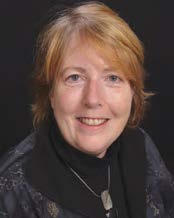 I just finished reviewing our 69th issue of Last Week in Washington: News of Interest to AGS Members (LWiW, published on 8/19/2026) which continues to enjoy high readership among AGS members with between 40 and 50% of recipients opening it weekly. Since launching LWiW, readership of our regular AGS listservs has also gone up to an open rate of 40-50%. As a point of comparison, the benchmark open rate for member list servs is 34%. To me, the open rate signals that our members see value in both these publications. For me, I find them both really helpful for keeping on top of what’s going on in geriatrics and gerontology and also in the policy world writ large.
Speaking of member value, this is my 45th AGS 360 since becoming AGS CEO. Our quarterly AGS news letter remains one of our most highly valued member benefits and that is largely due to this column. Just kidding on the column being the reason! The quarterly newsletter offers members an opportunity to take a deeper dive into what is up around the AGS and in geriatrics. For example, this issue features two stories that you won’t want to miss – “The AGS/ADGAP Leadership & Life Skills Curriculum” and “Meet the New Chief Editors of the Journal of the American Geriatrics Society”. It will come as no surprise that I have a few thoughts about both of these topics.
- Last year, the AGS/ADGAP Leadership & Life Skills Curriculum program graduated 84 health professional trainees and geriatrics fellows. The faculty for this program is comprised of exceptional leaders, led by Helen Fernandez, MD, MPH who is the current ADGAP Board Chair and one of the biggest cheerleaders for geriatrics that I know (see below for a complete faculty list). Enrollment opens in September and I hope that our fellows in training and other early career health professionals will enroll. Thanks to our Geriatric Medicine Fellowship Directors and other senior faculty for encouraging people who are early in their careers to consider this opportunity.
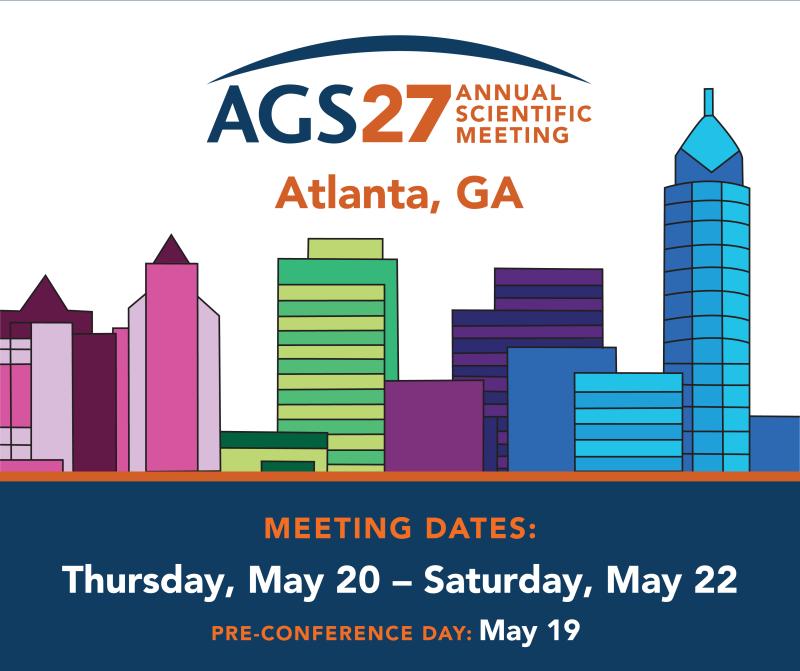
I’ve known Deb Saliba and Alex Smith for years and could not be more delighted that they agreed to become Co-Editors-in-Chief of the Journal of the American Geriatrics Society (JAGS). I can’t imagine a better team to lead us as the world of journal publishing evolves to meet technological advances and as we all grapple with the changing landscape of federal funding and its implications for scientific journals. We all owe a debt of gratitude to Joseph Ouslander for his careful stewardship of JAGS during his tenure as Editor-in Chief and look forward to continuing to work with him as Editor-in-Chief Emeritus and also on the Health in Aging Foundation Board where he serves as Treasurer. We’ll fully celebrate Joe in a future issue of this newsletter and at the 2027 AGS Annual Scientific Meeting in Atlanta. Stay tuned.
Last week, the Geriatrics at Your Fingertips® (GAYF®) authors met to discuss the 29th edition. This compendium of geriatrics information supports clinicians wherever they may practice. When it first published in 1999, the print edition could fit easily in your pocket and having an electronic edition was but a glimmer in the eyes of your AGS staff. Flash forward to today and GAYF® is available on your smartphone, tablet, and computer. And while we still offer a print edition, most users of GAYF® sub scribe to the GAYF® app or access it via GeriatricsCareOnline where it is pro vided for free to AGS members. We are grateful to all of our GAYF® authors (see side below) but a special shoutout to David Reuben (who conceived of GAYF®), Keela Herr, Jim Pacala, and Todd Semla who have served as authors since the inception of this indispensable resource!
In the category of “in case you are wondering”, this year’s proposed Medicare Physician Fee Schedule Rule weighed in at 1,592 pages and our staff, consultants, and volunteer leaders are now working on AGS’ comments to the Centers for Medicare and Medicaid Services (CMS). I am always amazed at how they come together to develop a cohesive comment letter on a very complex topic. At the same time, they look for opportunities to align with other organizations even as we are digesting the policies proposed in the rule. Because of their commitment, we are able to offer meaningful comments to CMS. Past comments have led to improvements in how geriatrics health professionals are paid. We’ve published a complete list of this team in the online edition of this issue of AGS News.
Hope everyone has a great end to the summer,
AGS/ADGAP LEADERSHIP & LIFE SKILLS CURRICULUM FACULTY
Debora Afezolli, MD, Icahn School of Medicine at Mount Sinai
Olusegun Apoeso, MD, Icahn School of Medicine at Mount Sinai
Pei Chen, MD, University of California, San Francisco (UCSF)
Helen Fernandez, MD, MPH, Icahn School of Medicine at Mount Sinai
Roopali Gupta, MD, University of California, San Diego (UCSD)
Lesca Hadley, MD, MBA, FAAFP, AGSF, UNT Health
Caitlyn Kuwata, MD, University of Southern California (USC)/ LA General Medical Center
Ayla Pelleg, MD, Icahn School of Medicine at Mount Sinai
Vanessa Rodriguez, MD, Icahn School of Medicine at Mount Sinai
Nisha Rughwani, MD, Icahn School of Medicine at Mount Sinai
Martine Sanon, MD, Icahn School of Medicine at Mount Sinai
GERIATRICS AT YOUR FINGERTIPS® 29TH EDITION AUTHORS
Eric E. Brown, MD, MSc, FRCPC
Keela A. Herr, PhD, RN, FAAN, AGSF
Alayne D. Markland, DO, MSc
James T. Pacala, MD, MS, AGSF
David B. Reuben, MD, AGSF
Todd P. Semla, PharmD, MS, AGSF
Sarah A. Wingfield, MD
AGS PAYMENT SUBCOMMITTEE
Kristine Blackwood, JD
Amanda Cassidy, MPP
Audrey K. Chun, MD
Alanna C. Goldstein, MPH
Peter A. Hollmann, MD, AGSF
Anna Kim, MSW
Janice A. Knebl, DO
Bruce M. Kinosian, MD
Alan E. Lazaroff, MD, AGSF
Nancy E. Lundebjerg, MPA
Dheeraj Mahajan, MD, MBA, MPH
Rebecca K. Masutani, MD, MHA
Denise A. Merlino, CPC, MBA, CNMT
Michael H. Perskin, MD
Lisa K. Price, MD
Paul Rudolf, JD, MD
Quratulain "Annie" Syed, MD, AGSF
Robert A. Zorowitz, MD, MBA, AGSF
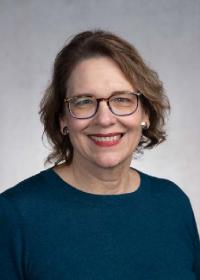
In July, I had the honor of representing AGS at the International Association of Gerontology and Geriatrics (IAGG) World Congress of Gerontology and Geriatrics. Hearing perspectives from different countries and health systems was a powerful reminder of the value of sharing our knowledge, experiences, and approaches to care. While our health systems and communities may differ, we share a common commitment to improving the health and well-being of older adults—and it is through opportunities to learn from one another and work together that we can continue to advance care for older adults everywhere.
That spirit of collaboration and shared purpose is also at the heart of our very own AGS community. As summer settles in and the days grow long, I find myself reflecting on all that we have accomplished together, the power of community, and the many people within the AGS who come together to advance our health and well-being as we age. AGS members’ commitment and passion are what advances our vision for a future where we are all able to contribute to our communities and maintain our health, safety, and independence as we age.
In this column I celebrate some of those members. Whether you contribute to clinical guidance, AGS position statements, or our various writing groups; serve on our Committees, Special Interest Groups, or Board of Directors; or help develop resources like our GRS Teaching Slides and the trusted information available through HealthInAging.org, your work has a meaningful impact on our members, our profession, and the older adults we serve.
This year, AGS has published two new position statements in the Journal of the American Geriatrics Society (JAGS): American Geriatrics Society Position Statement: Advancing the Healthcare of Lesbian, Gay, Bisexual, Transgender, Queer, Intersex and More Older Adults and Generative AI in the Care of Older Adults: A Position Statement from the American Geriatrics Society.The former is an update to the 2015 position statement on the same topic and aims to ensure that LGBTQI+ older adults have access to high-quality healthcare that meets their needs; the latter is a framework to address the ethical, clinical, and systems level implications of generative AI in the care of older adults. Our CEO, Nancy Lundebjerg, gave the writing group members of both statements a shout-out in her Spring 360 column. You can find the list of writing group members involved in developing those position statements in the online version of the spring issue of AGSNews.
I also want to recognize some of the "unsung heroes" of AGS—our dedicated volunteers who work behind the scenes to keep our educational resources current and relevant. The members who regularly review and update the Health in Aging A–Z Health Topics and the Geriatrics Review Syllabus (GRS) Teaching Slides provide an invaluable service to clinicians, learners, older adults, and family caregivers alike. Their careful attention to detail, commitment to evidence-based information, and willingness to share their expertise ensure that these trusted resources remain accurate, practical, and accessible. While this work often happens quietly and out of the spotlight, its impact is felt every day by those who rely on these resources to support high-quality care for older adults. We are deeply grateful for their dedication and generosity. Please find a list of those who have helped update the Aging & Health A-Z content on HealthInAging.org and the latest version of the GRS Teaching Slides in the sidebar to this piece.
I am also grateful to the members who serve on our Committees, Special Interest Groups (SIGs), and Board of Directors. Your leadership, expertise, and commitment help shape the work of AGS and ensure that we continue to meet the needs of our members and the older adults we serve. For more information about our Board of Directors, Committees, and Sections & Special Interest Groups, visit the Leadership and Staff page on the AGS website.
Your willingness to share your knowledge and experience strengthens AGS in countless ways. The work we do as a Society on behalf of older adults simply would not be possible without your commitment, collaboration, and generosity. So, on behalf of the entire AGS community and from the bottom of my heart, thank you for all that you do.
If this column has left you feeling inspired by the contributions of your fellow members, I encourage you to consider getting involved. No matter where you are in your career, there are opportunities to lead, connect, and serve with AGS. Whether you're interested in serving on a committee, joining a Special Interest Group, becoming a mentor, contributing to the Annual Scientific Meeting, or lending your voice to our advocacy efforts, you can make a meaningful impact. I hope you'll find a way to share your talents and help shape the future of AGS. Learn more about ways to get involved by visiting the Get Involved page on the AGS website.
AGING & HEALTH A-Z REVIEWERS
Alice Pomidor, MD, MPH, AGSF
Ashna Rajan, MD
Caitlin Jones, MD
Carolina Valencia, MD
Catherine Lumb, MD
Collin Burks, MD
Darlene Moyer, MD
Donna Fick, PhD, FAAN, FGSA, GCNS-BC, AGSF
Elizabeth Zavala, MD
Ellen Schmitt, MD
Eloy Ruiz Mendoza, MD
Fernanda Ninin, MD
Gillian Love, MD
Jen Ouellet, MD
Josephine Gomes, MD
Julia Hiner, MD
Kerry Hildreth, MD
LaToya Smith, MD
Loni Belyea, MD
Lyanne Santana Khoury, MD
Mariam Dundu, MD
Matt McNabney, MD, AGSF
Meredith Gilliam, MD, MPH
Mike Malone, MD
Natalie Yuwono Tjota, MD
Peter Hoang, MD
Rachel Saltness, MD
Rebecca Berger, MD
Renee Flores, MD, FACP, MHSA, AGSF
Sara Shu, DO
Sing Palat, MD
Tim Farrell, MD, AGSF
Victoria Grumbles, MD
GRS12 TEACHING SLIDES AUTHORS
Abeera Azam, MD
Aileen Pangilinan, MD
Alexandra Petrakos, MD
Brianna Wynne, MD
Carolina Valencia, MD
Catherine Lumb, MD
Collin Burks, MD
Elizabeth Zavala, MD
Emily Romano, MD
Fatima Mahmood, MD
Gillian Love, MD
Jen Ouellet, MD
Josephine Gomes, MD
Julia Hiner, MD
Kerry Hildreth, MD
LaToya Smith, MD
Lauren Gerlach, DO
Loni Belyea, MD
Meredith Gilliam, MD, MPH
Natalie Yuwono Tjota, MD
Renee Flores MD, FACP, MHSA, AGSF
S. Estella Horwath, MD
Sara Shu, DO
Sing Palat, MD
Thomas Hagerman, MD
Victoria Costello, MD
The American Geriatrics Society has received notice of intent to organize a new AGS State Affiliate in Colorado.
The proposed affiliate will provide an opportunity for geriatricians and other health professionals interested in the care of older adults to connect with colleagues locally, advance the principles and practice of geriatrics, and support education, advocacy, research, and improved care for older adults throughout the state of Colorado. Planned activities will span a wide range of initiatives, including hosting educational events such as conferences, seminars, and workshops to promote evidence-based practices and share the latest research in geriatric care. Additionally, the proposed Colorado state affiliate plans to actively engage in advocacy efforts, striving to influence policy decisions and shape healthcare legislation to better address the needs of older adults.
Members of the geriatrics community in Colorado who are interested in participating in the organization of the affiliate are encouraged to get involved. The organizing group welcomes AGS members and other professionals who share an interest in strengthening geriatrics and improving the health and well-being of older adults. Those interested in learning more about the proposed affiliate or participating in its organization should contact Tyson Garfield, DO MBA/MS, FACP at tyson.garfield@cuanschutz.edu.
Additional information about the affiliate, including opportunities to participate in the organizing process and future membership, will be shared as plans develop.
The formation of an AGS Affiliate is subject to the requirements and approval processes established by the American Geriatrics Society.
PHYSICIAN VALUE EXCHANGE: CAREER & SPECIALTY DATA PLATFORM POWERED BY AGS/ADGAP BENCHMARKING DATA
Free AGS Member Benefit: Exclusive Access to Robust Geriatrics Dataset
- Track key metrics, benchmark yourself and your practice and explore filterable geriatrics data
- Inform career growth, budget discussions and negotiations to stay competitive
- Create personalized reports and graphical representations with data typical to your environment
Complete the 2026 AGS/ ADGAP Benchmarking survey today and get access to the latest Geriatrics dataset. LEARN MORE: bit.ly/4uNgWvm
AGS partners with Phairify to give members exclusive access to the Physician Value Exchange.
*Currently available for AGS geriatrician members only

Tell us a bit about your career journey and how you became interested in geriatrics?
I entered medical school knowing I wanted to be a primary care physician, but I wasn't initially sure which path to take. During my family medicine residency, I found myself caring for many older adults with complex medical needs and quickly realized how much I enjoyed working with that population. A pivotal moment came when Dr. Naomi McMackin, a geriatrician clinician-educator in my residency program at Brown, encouraged me to consider a geriatrics fellowship. She helped me see that I could build a career caring for older adults and contributing to the field. I stayed at Brown for fellowship, where I had the privilege to learn from some of the giants of the field, including Drs. Richard Besdine, Stefan Gravenstein, and Ramona Rhodes, all of whom played an important role in shaping my career. Looking back, my path to geriatrics wasn't driven by a single personal or professional experience— it was a specialty I naturally gravitated toward during residency, and I've never looked back.
What is your favorite part of working with older adults?
I like to tell my trainees that geriatrics is really where the action is in medicine. Every day brings something new and interesting to work on, whether in patient care, education, research, administration, or ethics. I enjoy the complexity of caring for older adults, but I also value the long-term relationships we build and the stories our patients share. I'm increasingly interested in improving healthcare systems and processes because I believe that if we can create systems of care that work well for older adults, we can make healthcare better for everyone.
What are you most proud of in your career?
One of the accomplishments I'm most proud of came during the COVID-19 pandemic. In college I was a philosophy major and I had worked with a bioethicist on the topic of rationing health care resources, so when I learned that some states were including age-based cutoffs in their crisis standards of care, I realized I could draw on my previous work to help address the issue. With the support and mentorship of Nancy Lundebjerg, CEO of the American Geriatrics Society, and also Dr. Debra Saliba, I had the opportunity to lead the AGS writing group charged with developing the “AGS Position Statement: Resource Allocation Strategies and Age Related Considerations in the COVID-19 Era and Beyond" and a companion piece, “Rationing Limited Healthcare Resources in the COVID-19 Era and Beyond: Ethical Considerations Regarding Older Adults”. These became two of the most impactful publications of my career and helped inform conversations around the country. I also worked with another mentor, Dr. Mark Supiano, MD, AGSF, to advocate for the removal of an age-based cutoff in the Utah crisis standards of care. Although thankfully crisis standards of care were ultimately never implemented during the COVID-19 pandemic, I'm proud that this work will help ensure the equitable treatment of older adults in future public health emergencies.
What are you working on now?
My primary focus right now is advancing age-friendly care, research, and education at both the local and national levels. At University of Utah Health, I serve as Geriatrics Division Associate Chief for Age-Friendly Care and Associate Director of the University of Utah Center on Aging, where I work with colleagues across our health system to implement the 4Ms framework and improve the quality of care for older adults. University of Utah Health is an early adopter of the Age-Friendly Health Systems movement, partnering with organizations like the Institute for Healthcare Improvement, The John A. Hartford Foundation, and Yale Patient Priorities Care. We established an interprofessional University of Utah Age Friendly Collaborative that spans all five of our hospitals and has helped us prepare for the CMS Age Friendly Hospital Measure requirements. We’ve also engaged in anti ageism work and have collaborated with our health system’s Patient Experience team to develop an Age-Friendly Patient & Family Advisory Council. I currently serve as the higher education representative to the Utah Commission on Aging, which engages in work such as developing our state’s master plan on aging.
It's exciting to see the momentum that's building as more health systems embrace these age-friendly principles. Our age-friendly journey in Utah began with visionary leaders like former AGS president Dr. Supiano. Because of him, the groundwork is set and we are now transforming care for older adults across our health system and beyond at an increasingly rapid pace, and it's exciting to see how far the movement has come.
Piece of advice to share with someone who is considering a career in geriatrics or just starting out?
I would tell anyone considering a career in geriatrics that it's a great place to be in medicine. Early in your career, don't be afraid to explore opportunities that may be outside your comfort zone. Some of the experiences that have had the biggest impact on my career—including my work in health policy during the COVID 19 pandemic—came from saying yes to something new.
I would also encourage people to be prepared to pivot. Geriatrics is constantly evolving, and the clinical, research, education, and policy worlds are very much interconnected. Many of the projects I'm working on today—from advancing age-friendly health systems to improving cognitive assessment in primary care— weren't even on my radar a few years ago. Staying open to new challenges and seeing how different areas of geriatrics complement one another can lead to opportunities you never expected.
What is your favorite thing about the AGS or memory involving the AGS?
My favorite thing about the AGS is the people. The camaraderie and generosity of spirit exemplified by its members make it my professional home. I am especially honored to serve on the AGS Board of Directors, which has given me the opportunity to give back to the organization and help advance the priorities of its members.
Mentorship has also been one of the greatest benefits of being involved with AGS. I've learned so much from leaders like Dr. Sharon Brangman, and I try to pay that generosity forward by mentoring others entering the field.
The AGS Annual Scientific Meeting is always a highlight for me. One of my favorite sessions is the Geriatrics Literature Review, which has been both educational and entertaining over the years. It's one of the many reasons I always look forward to this meeting, which I’ve attended every year since 2008.
Whether you are new to the American Geriatrics Society or have been a member for years, your membership provides you with access to resources, educational opportunities, and a community designed to support you throughout your career.
Here is a quick reminder of the resources and opportunities included in your AGS membership:
PUBLICATIONS & RESOURCES
Complimentary e-subscription to:
- Journal of the American Geriatrics Society (JAGS) – the leading peer-reviewed journal in geriatrics
- Journal of Gerontological Nursing – for nurse and nurse practitioner members of the AGS
- Geriatrics At Your Fingertips®, Geriatrics Evaluation & Management Tools, the AGS Cultural Navigator and the AGS Beers Criteria® Digital Pocketcard
Discounts on premier AGS products, resources and events:
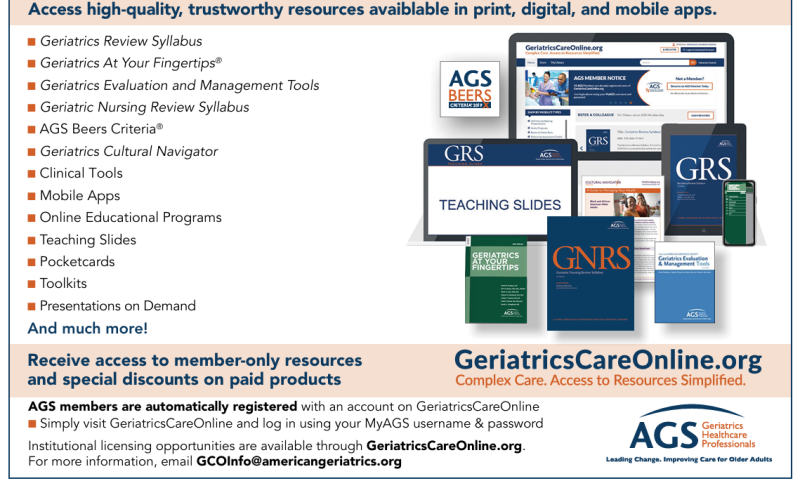
- GeriatricsCareOnline.org – your one-stop online portal for accessing the full suite of AGS’ educational resources. Your AGS membership provides access to free resources as well as discounts that allow you to purchase comprehensive content suited to your specific needs.
- AGS Annual Scientific Meeting – take advantage of your membership to get discounted registration to the premier educational event of the year in geriatrics.
Stay up to date on the latest news, opportunities and events through:
- AGS Week in Review – the weekly e-newsletter delivered to your inbox
- AGS News – our quarterly newsletter delivered to your mailbox
ADVOCACY
- Last Week in Washington – a weekly e-newsletter to keep you up to date with news from the Executive Branch, Congress, and the courts, with links to specific policies that potentially impact our shared commitment to improving the well-being of all of us as we age.
- The AGS Advocacy Center – makes it easy for you to stay informed and take action on the issues that matter most to older adults and the geriatrics community.
- Representation in Washington – AGS advocates on your behalf to improve healthcare for older adults.
CAREER & PROFESSIONAL DEVELOPMENT
- Virtual Mentor Match Program – enroll as a mentor, mentee, or both, and customize your experience to fit your goals, whether you're looking for a one-time consultation or a more long-term mentoring relationship.
- In-Person Mentorship Program – sign up to be matched and meet at the in-person AGS Annual Scientific Meetings.
- The AGS/ADGAP Leadership & Life Skills Curriculum (LLSC) – a free comprehensive, virtual pro gram designed exclusively for AGS Fellows-in-Training and Early Career Professional members
- AGS/ADGAP Compensation & Productivity Benchmarking Tool – provides geriatrician members with access to national level geriatrics data that can be used to benchmark against peers, track key metrics, and use insights to negotiate, grow, and stay competitive.
- AGS Fellow Status (AGSF) – awarded to AGS members who have demonstrated a professional commitment to geriatrics, contributed to the progress of geriatrics care, and are active participants in the Society's activities. Learn more and apply at https://bit.ly/3RcG7cN.
- AGS Career Center – home for promoting or finding high-quality career opportunities in geriatrics
COMMUNITY & NETWORKING
- MyAGSOnline – an exclusive online community that allows you to connect with other members to ask questions, get advice, and share insights.
- Sections and Special Interest Groups (SIGs) – over 60 section and special interest groups to choose from – join and collaborate with your colleagues on your specific topics of interest.
OPPORTUNITIES TO GET INVOLVED
- Opportunities are posted throughout the year to serve as a JAGS peer reviewer, contribute to AGS publications, help shape the AGS Annual Scientific Meeting, and participate in guideline and educational resource development.
- Apply to serve on an AGS committee – committee service offers a meaningful way to collaborate with colleagues, develop leadership skills, and help shape the future of geriatrics.
- Eligibility to apply for AGS awards and recognition – opportunity to be recognized for outstand ing contributions to geriatrics, elevate your work, and inspire others in the field.
We encourage you to explore all your membership has to offer and make the most of your AGS experience. You can find all of these listed benefits and more on one easy to navigate web page. Sign into MyAGSOnline and select “Resources” – or use this link: https://bit.ly/4yolRWp.
If you have any questions about your membership benefits and services, contact us at membership@americangeriatrics.org or 212.308.1414.
The AGS/ADGAP Leadership & Life Skills Curriculum is back for another year, offering a unique opportunity for AGS Fellows-in-Training and Early Career Professional members to develop and enhance skills that are essential for success throughout their career. Designed to be flexible and easy to fit into busy schedules, the free virtual program will kick off with its first workshop on September 25, 2026 and run through July 1, 2027. Registration for the 2025-2026 program is free and exclusively for AGS FIT and Early Career Professional members.
Since launching in 2021, the AGS/ADGAP Leadership & Life Skills Curriculum has supported close to 400 fellows-in-training and early career professionals representing a wide range of disciplines. Helen Fernandez, MD, MPH, whose vision has shaped the program from the start, serves as the course director. “The online curriculum focuses on practical skills that aren't always taught during training but are essential for long-term success. It has been inspiring to witness LLSC participants build their skills and confidence through this program.”
Available at no cost to AGS Fellows-in-Training and Early Career Professional members, this virtual program delivers practical, real-world guidance from experienced leaders in geriatrics. Participants can learn on their own schedule while gaining skills they can immediately apply in fellow ship, their first faculty appointment, or clinical practice.
The curriculum offers flexible, self-paced learning via online modules combined with opportunities to connect with peers and experienced faculty through a series of workshops and an exclusive online community. The curriculum explores topics including:
- Building your leadership style and confidence
- Effective communication and conflict management
- Negotiation strategies for contracts, compensation, and career opportunities
- Time management and productivity
- Career planning and professional development
- Mentorship and sponsorship
- Wellness and resilience
- Financial literacy and other life skills that support long-term career success
This virtual program includes:
- Self-directed online modules
- Audio companions for in-depth discussions
- Journaling/reflection exercises to apply skills in practice
- Supplemental reading materials for deeper understanding
- Interactive workshops led by curriculum authors/advisors, using case studies and small groups
- A dedicated online community for networking, sharing experiences, and connecting with faculty
AGS Fellows in Training and Early Career Professional members should not miss this opportunity!
The deadline for registration for this year’s program is September 25, 2026. The AGS/ADGAP LLSC participants will have access to the Online Educational Modules and the Online Community through July 1, 2027. For more information and to register for the LLSC, please visit https://leadershipskills.agscocare.org. For additional questions about the AGS/ADGAP Leadership & Life Skills Curriculum, please contact Deena Sandos at dsandos@americangeriatrics.org.
"The AGS/ADGAP Leadership Program was one of the most meaningful experiences of my geriatric fellowship. It gave me practical leadership skills that I was able to apply immediately in my daily work, from leading quality improvement initiatives to collaborating with interdisciplinary teams and teaching nursing staff. More importantly, it challenged me to reflect on the kind of geriatrician and leader I aspire to be. I leave the program feeling more confident in my ability to advocate for older adults, support my colleagues, and lead with purpose. I am truly grateful for this opportunity and highly recommend it to future fellows.” - Lakshmi Namratha Koneru, MD, Geriatric Fellow, Carolinas Medical Center, Atrium Health
"As an early career physician, I was looking for an opportunity to improve my leadership skills. This program gave me tools that I was able to use in real time and helped me grow as a physician leader. I was also able to meet colleagues from different institutions to open the door for collaboration and advice. It has really been a great course overall!" - Sara Medina-Bielski, MD, Geriatric Fellow, Mayo Clinic
"The Leadership and Life Skills Curriculum provided practical skills that have strengthened my confidence as a geriatric fellow, both in patient care and in working with interdisciplinary teams. It has been an invaluable part of my training, helping me grow as a leader while preparing me for the challenges of my future career." - Diva Maraj, MD, Geriatric Medicine Fellow, Harvard Medical School